STORAGE
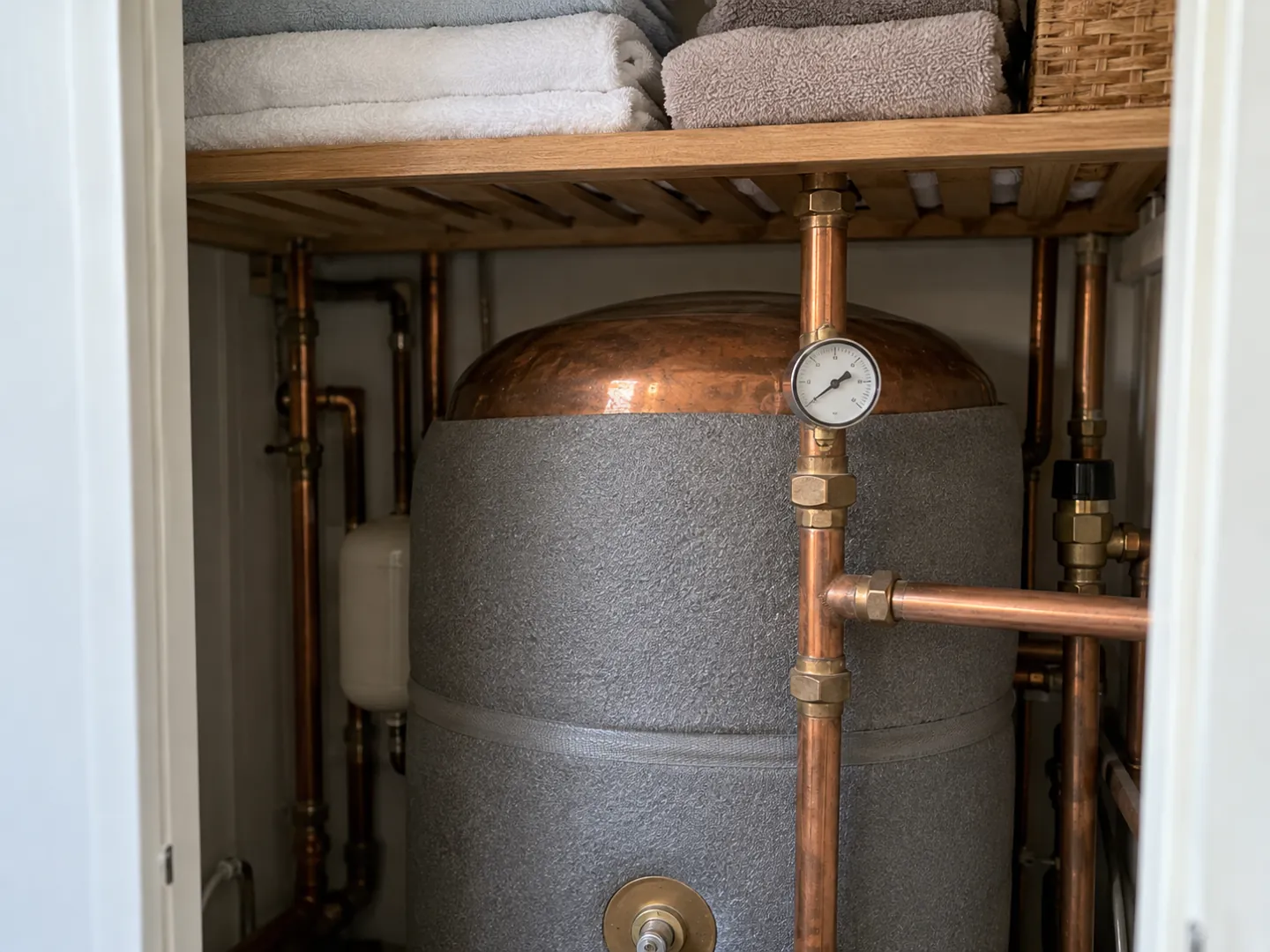
60°C in the cylinder
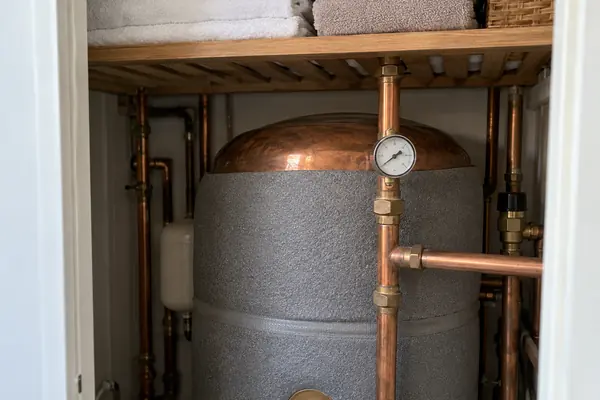
HSE says hot water should be stored at 60°C or higher. Legionella bacteria multiply between 20 and 45°C and do not survive above 60°C.
Check a temperatureWHAT THE GUIDANCE SAYS
Hot water has two jobs that pull in opposite directions.
It needs to be hot enough in the cylinder to stop legionella bacteria growing, and cool enough at the bath tap not to scald. UK guidance solves this by mixing the water down close to where it comes out.
MIX IT DOWN close to the tap
THE SHORT ANSWER
Legionella and scalds set different limits.
A mixing valve lets one system meet both.
STORAGE
HSE says hot water should be stored at 60°C or higher. Legionella bacteria multiply between 20 and 45°C and do not survive above 60°C.
Check a temperatureTHE BATH
In new homes in England, Building Regulations require the hot supply to a fixed bath to deliver no more than 48°C, usually with a blending valve.
See the numbersAT HOME
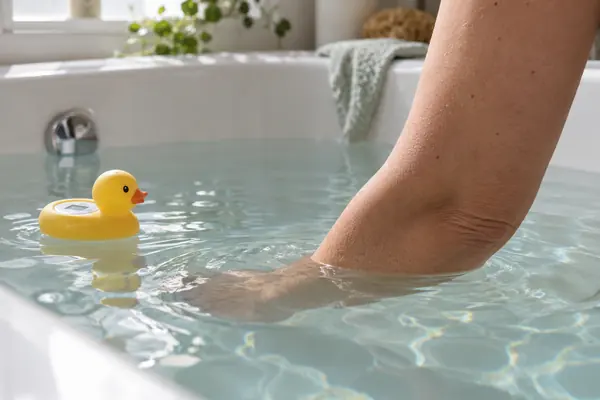
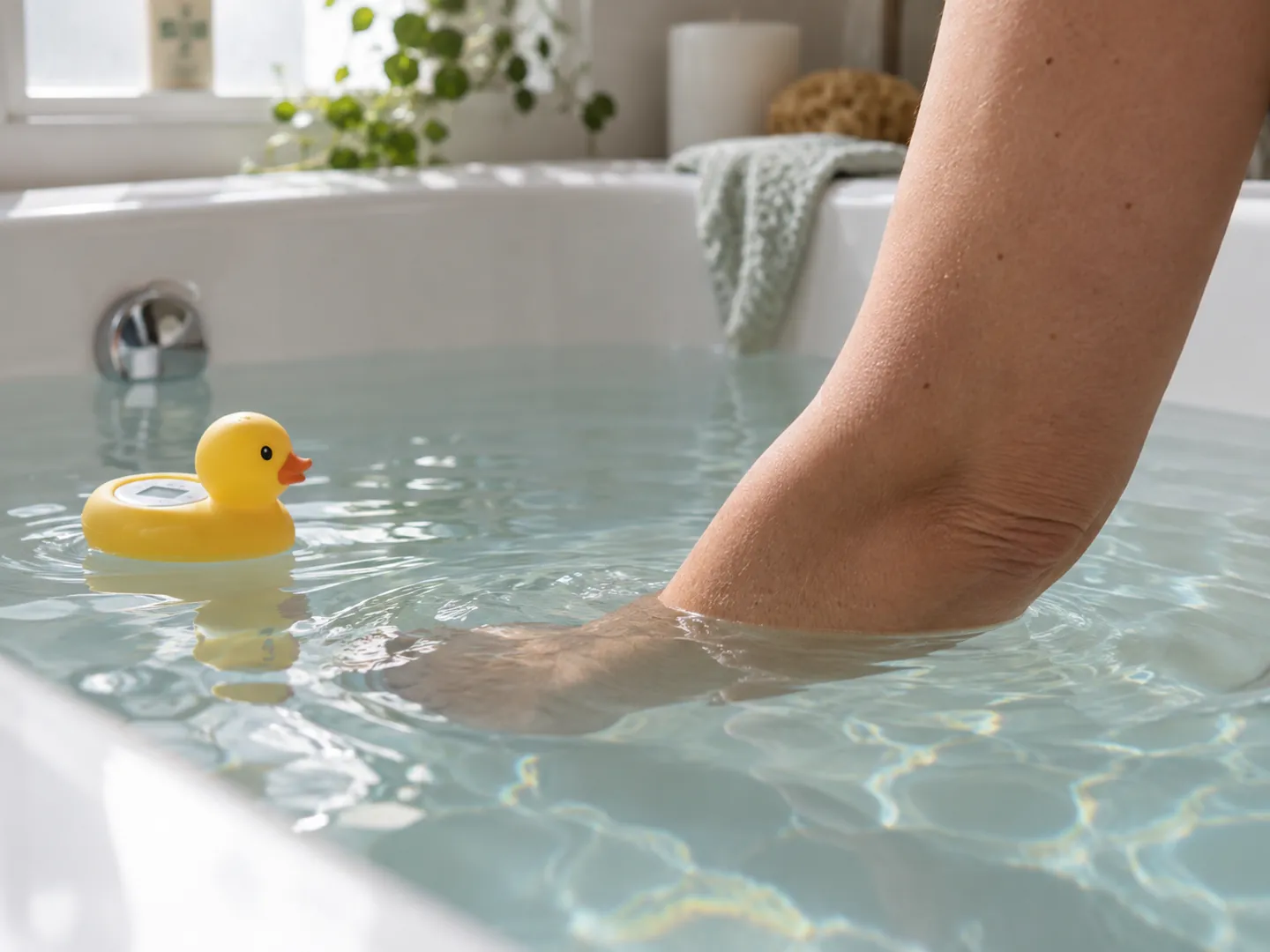
The Child Accident Prevention Trust suggests running cold water first and topping up with hot, then testing with your elbow.
Bath-time habitsA QUICK TEMPERATURE CHECK
Pick a water temperature to see why it appears in UK guidance. The bar shows how much of a scald risk water at that temperature poses.
Based on HSE guidance and Approved Document G. General information only, not plumbing or medical advice.
TWO NUMBERS WORTH KNOWING
One figure on how quickly hot water harms skin,
one on how often bath scalds reach hospital.
5 seconds
Time for 60°C water to cause a full thickness burn in an adult
Professor Denise Kendrick's team noted that home water heaters are often set at 60°C or above, which can cause a full thickness burn in an adult in 5 seconds, and more quickly in children.
SPEED · UNIVERSITY OF NOTTINGHAM
≈ 2,000
Bath water scalds seen in UK emergency departments each year
Most are children, and about 500 children a year are admitted to hospital. In the study, homes with a thermostatic mixing valve had bath water up to 11°C cooler.
HOSPITAL CASES · UNIVERSITY OF NOTTINGHAM
The Child Accident Prevention Trust says babies and toddlers have skin up to 15 times thinner than an adult's, and that a young child may stay in a scalding bath rather than climb out.
FOUR HABITS TO TRY
None of these means turning the boiler down below what guidance asks for. They are about how hot water reaches the bath.
Put the cold in first and top up with hot, as the Child Accident Prevention Trust suggests.
Dip your elbow in. CAPT says the water should not feel hot or cold.
A thermostatic mixing valve on the bath fixes the maximum hot tap temperature. Ask a qualified installer or your landlord.
CAPT notes many bath scalds happen when a child plays with the hot tap or gets in before the bath is ready.
MIXER TAP OR MIXING VALVE?
An ordinary mixer tap blends hot and cold by hand, so the hottest water is still there if you turn it fully hot. The Nottingham researchers stressed that thermostatic mixing valves are not to be confused with less precise mixer taps.
A TMV sits across the hot and cold pipes and holds the water at a set maximum. Approved Document G says such valves should fail safe and not be easily altered by building users, and HSE says TMVs should be monitored and maintained.
Questions
Because temperature is also used to control legionella. HSE says hot water should be stored at 60°C or higher and distributed at 50°C or higher, while cold water stays below 20°C. Mixing down near the outlet keeps both goals.
In England, Requirement G3(4) of the Building Regulations says the hot water supply to any fixed bath in a newly built home, or one formed by a material change of use, must not deliver water above 48°C.
A valve that blends hot and cold water to a set maximum before it reaches the tap. The Child Accident Prevention Trust says you can have one fitted by a professional or ask your landlord.
No. A mixer tap lets you blend by hand but does not cap the temperature. University of Nottingham researchers described mixer taps as less precise than thermostatic mixing valves.
Dipping your elbow into the bath before a baby or toddler goes in. The Child Accident Prevention Trust calls it the quickest way to check, and says the water should not feel hot or cold.
Sources
ABOUT THIS NAME
airtouchmixer.com is part of the DoodleSale portfolio. It isn't in an auction right now, but you can ask about leasing it.